
E-Waste 101: Items That Should Never Go to Landfill
E-waste is now the world's fastest-growing bio-hazard waste stream, and the vast majority of it ends up in general landfill, where it quietly leaches toxic chemical waste into soil and groundwater for decades. The frustrating part? Most of the items we throw away contain materials that are genuinely valuable, perfectly recyclable, and in some cases, legally required to be disposed of separately.
At Hulladek, responsible e-waste management is what we do. So let's break this down clearly: what electronics should never go to landfill, why it matters, and what you should do instead.
Why E Waste Are Different?
Electronics aren't like other digital waste. A plastic bottle in a landfill is bad. A smartphone in a landfill is a genuinely complex problem, because it contains a cocktail of materials that behave very differently once they're buried or incinerated.
Inside most consumer electronics, you'll find a mix of:
Hazardous substances- lead, mercury, cadmium, and arsenic that can leach into groundwater
Valuable recoverable metals- gold, silver, copper, and palladium that are worth recovering
Lithium-ion batteries- which can cause fires in e-waste collection vehicles and landfill sites if punctured or crushed. Flame retardants in plastic casings that release toxic fumes when incinerated
The point is, sending electronics to general e-waste disposal isn't just environmentally careless. It's actively harmful, and in many cases illegal under national and EU e-waste regulations. 74M Metric tonnes of e-waste are generated each year globally. 17% Of global e-waste is formally recycled. 57B$ worth of recoverable materials are discarded annually. The Items That Should Never Go in Your Bin
Smartphones and Tablets
These are probably the most commonly misdisposed of electronics on the planet. Every smartphone contains lithium batteries, trace amounts of gold in circuit boards, and a range of rare earth elements. When they hit a landfill, the battery risks become immediate, and the toxic material risks are long-term.
The right move to dispose of them is to return them to the manufacturer via a take-back scheme
or trade them in at a mobile retailer. Drop off at a certified waste electronics recycling collection point like Hulladek's network. Donate if the device still works.

Laptops and Desktop Computers
A laptop contains a lithium battery, a screen with potential mercury content of older models, circuit boards with precious metals, and plastic casings treated with flame retardants. None of that should go to general e-waste disposal. All of it can be responsibly processed by a certified recycler.
Televisions and Monitors
Older CRT televisions are among the most hazardous consumer electronics ever made; each one can contain up to 4kg of lead in the glass alone. But even modern flat-screen TVs and monitors contain fluorescent backlights with mercury, and their disposal is specifically regulated in most countries.
Important
CRT televisions and monitors must never be placed in general chemical waste disposals or recycling bins. They require specialist handling. Contact a certified e-waste electronics recycling processor; this is not a kerbside e-waste recycling item.
All Types of Batteries
This one surprises people because batteries feel small and harmless. They're not. A single lithium-ion battery in a landfill can contaminate thousands of litres of groundwater. Alkaline batteries contain manganese and zinc. Rechargeable batteries contain nickel, cadmium, or lithium, all of which are harmful in soil.
What to do Instead with these Hazardous Waste Materials?
Most supermarkets and electronics retailers have battery collection bins near the entrance ,use them.
Loose lithium batteries should never go in household e-waste recycling bins.
Built-in batteries in devices should be handled by a certified recycler who can safely extract.
Printers and Scanners
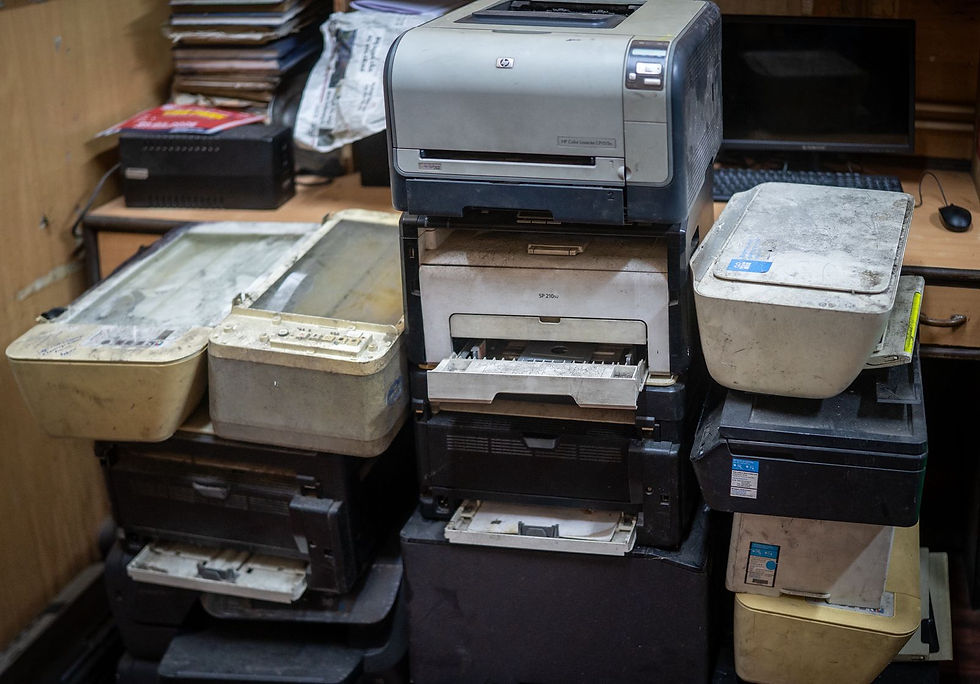
Office equipment like printers, scanners, and copiers is bulky, easy to ignore, and routinely dumped. But they contain ink cartridges with chemical waste residues, circuit boards, plastic casings, and, in some cases, toner powder that is considered hazardous waste. Many manufacturers operate free take-back programmes specifically for this category; therefore, check before you skip.
Fridges, Washing Machines, and Large Appliances
White goods sit in a grey area for a lot of people; they don't feel like electronics in the traditional sense. But fridges and air conditioning units contain refrigerant gases that are potent greenhouse gases if released. Washing machines, dishwashers, and ovens contain circuit boards and motors with recoverable metals. Local councils often run large appliance collection schemes. Check your local author. ity
Certified recyclers like Hulladek process large appliances responsibly
Small Kitchen Appliances
Toasters, kettles, hair dryers, electric toothbrushes, food processors, these all count as e-waste, and none of them belongs in your general bin. They contain heating elements, circuit boards, and wiring that can be recovered. Many high street retailers now have in-store collection points for small appliances, regardless of brand.
Gaming Consoles and Accessories
Consoles, controllers, headsets, and chargers are another category that regularly ends up in household e-waste disposal. A gaming console contains a GPU, RAM, circuit boards, a cooling system, and a power supply, all of which have recoverable value and components that shouldn't go to landfill. Peripherals like controllers contain lithium batteries.
Cables, Chargers, and Power Banks
It's easy to underestimate this one because a cable feels insignificant. But most charging cables contain copper wiring with a plastic coating treated with flame retardants, and power banks are essentially batteries with extra circuitry. Collectively, the volume of cables and chargers discarded every year is enormous. They should always go to an e-waste disposal point, not a bin.
Light Bulbs (Especially Fluorescent and CFL)
LED bulbs are e-waste. Fluorescent tubes and compact fluorescent lamps (CFLs) are hazardous garbage; they contain mercury vapour, and breaking them in a standard e-waste recycling bin or landfill releases that mercury into the environment. Dedicated bulb recycling is available at most DIY stores and through specialist collection services.
Hulladek Tip - A simple rule of thumb: if it has a plug, a battery, or requires electricity to function, it's e-waste. That means it should never go in your general household bin. Full stop.
What Happens When E-Waste Is Properly Recycled?
Proper electronic scrap recycling isn't just damage limitation. It's genuinely productive. At a certified facility, electronics are dismantled and sorted so that:
Precious metals like gold, silver, and palladium are recovered from circuit boards
Copper wiring is extracted and reused in new manufacturing
Plastic casings are shredded and processed for secondary use
Hazardous materials like mercury, lead, and cadmium are safely contained
Batteries are discharged, and their chemical waste components are responsibly managed
The recovered materials re-enter the supply chain, reducing the need for new mining, which is where a significant portion of electronics-related environmental damage actually originates.
E Waste Management: What You Can Do Right Now
You don't need to overhaul your entire life to make a real difference here. A few straightforward habits go a long way:
Set aside a dedicated box or bag at home for old electronics instead of letting them drift into the general waste.
Research your nearest certified e-waste drop-off point, or Hulladek operates collection centres and can arrange business pickups.
Check the manufacturer's take-back programmes before disposing of any device.
Ask your retailer about appliance return when making a new purchase
Spread the word. Most people simply don't know that these rules exist.
The Bottom Line
E-waste is one of those problems that feels distant until you really look at it, and then it's impossible to ignore. The devices we use every day contain both serious hazards and serious value. Getting the disposal right isn't complicated. It just requires a moment of intention rather than the path of least resistance.
At Hulladek, we've built our entire operation around making that moment as easy as possible, whether you're an individual clearing out a drawer of old phones or a business decommissioning a full IT infrastructure. The right disposal choice exists. We're here to help you make it.

Comments